Linked List
Introduction
Linked list structures leverage the EUTXO model to enhancing scalability and throughput significantly. By linking multiple UTXOs together through a series of minting policies and validators, it can improve the user experience interacting with smart contract concurrently.
The github repository introducing these data structures can be found here.
Documentation
Linked List
The Plutarch Linked List is an on-chain, sorted linked list solution designed for blockchain environments, specifically utilizing NFTs (Non-Fungible Tokens) and datums. It provides a structured and efficient way to store and manipulate a list of key/value pairs on-chain.
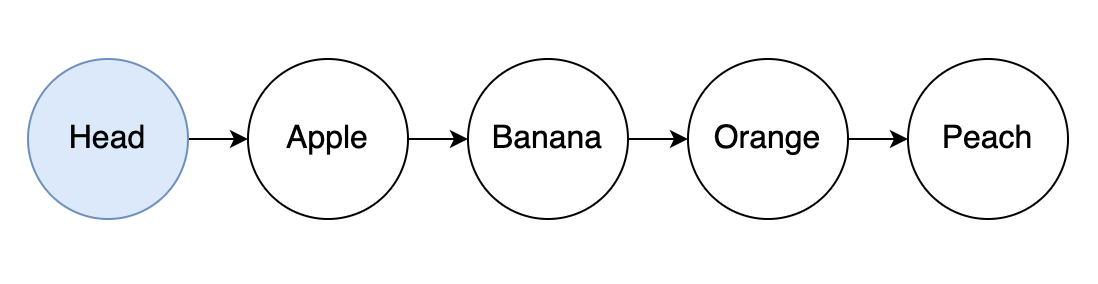
Entry Structure
Each entry in the list comprises:
- NFT: A unique identifier for each entry.
- EntryDatum: A data structure containing the key/value pair, a reference to the entry's NFT, and a pointer to the next NFT in the list.
EntryDatum Definition
data EntryDatum = EntryDatum {
  key :: BuiltinByteString,
  value :: Maybe SomeValue,
  nft :: NFT,
  next :: Maybe NFT
}
- key: A unique identifier for the entry.
- value: The value associated with the key. It can be Nothing for the head entry.
- nft: The NFT representing the entry.
- next: The NFT of the next entry in the list, or Nothing for the last entry.
Operations
Inserting an Entry
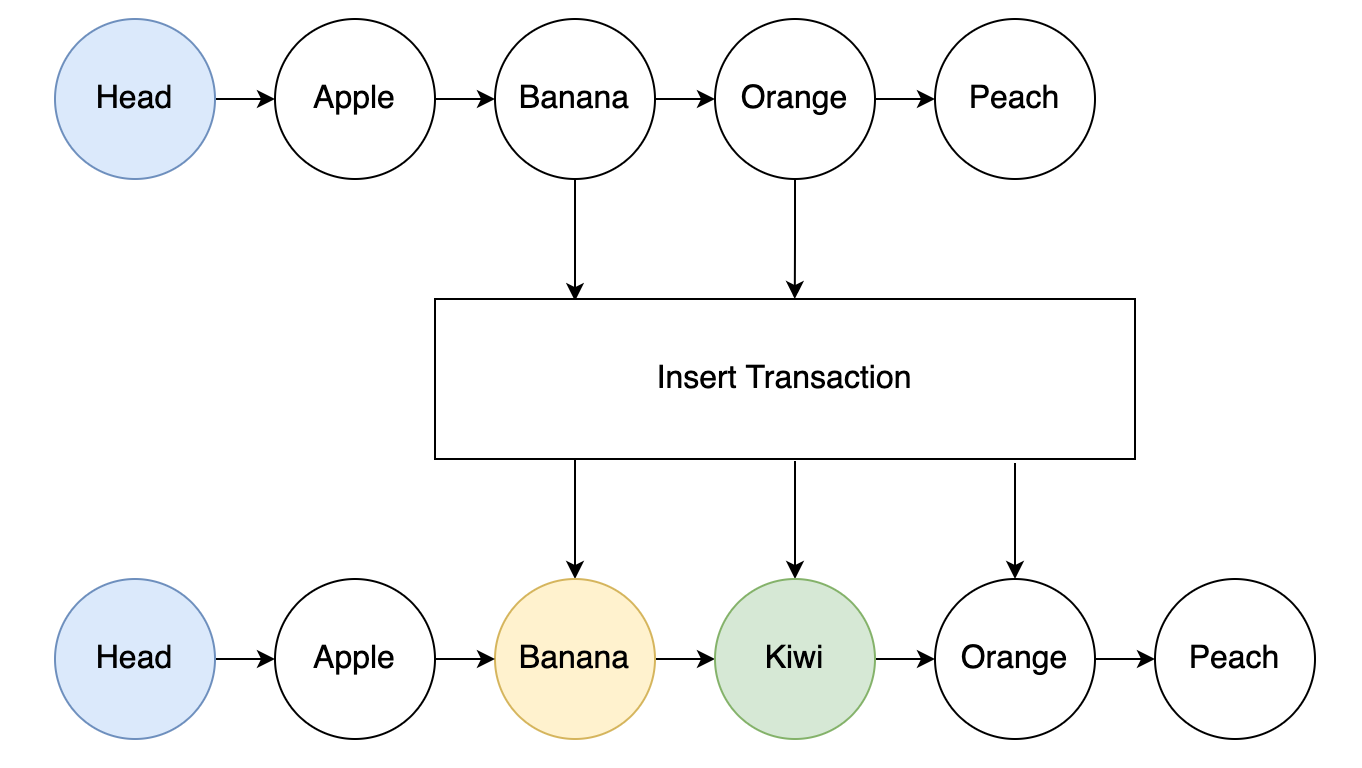
Insertion involves:
- Inputs: Two adjacent list entries.
- Outputs:
- The first input entry, modified to point to the new entry.
- The newly inserted entry, pointing to the second input entry.
- The second input entry, unchanged.
Validation Rules
- Keys must maintain the order: a < b < c, where a is the lowest, b is the new key, and c is the highest.
- The pointers must be correctly updated to maintain list integrity.
Removing an Entry
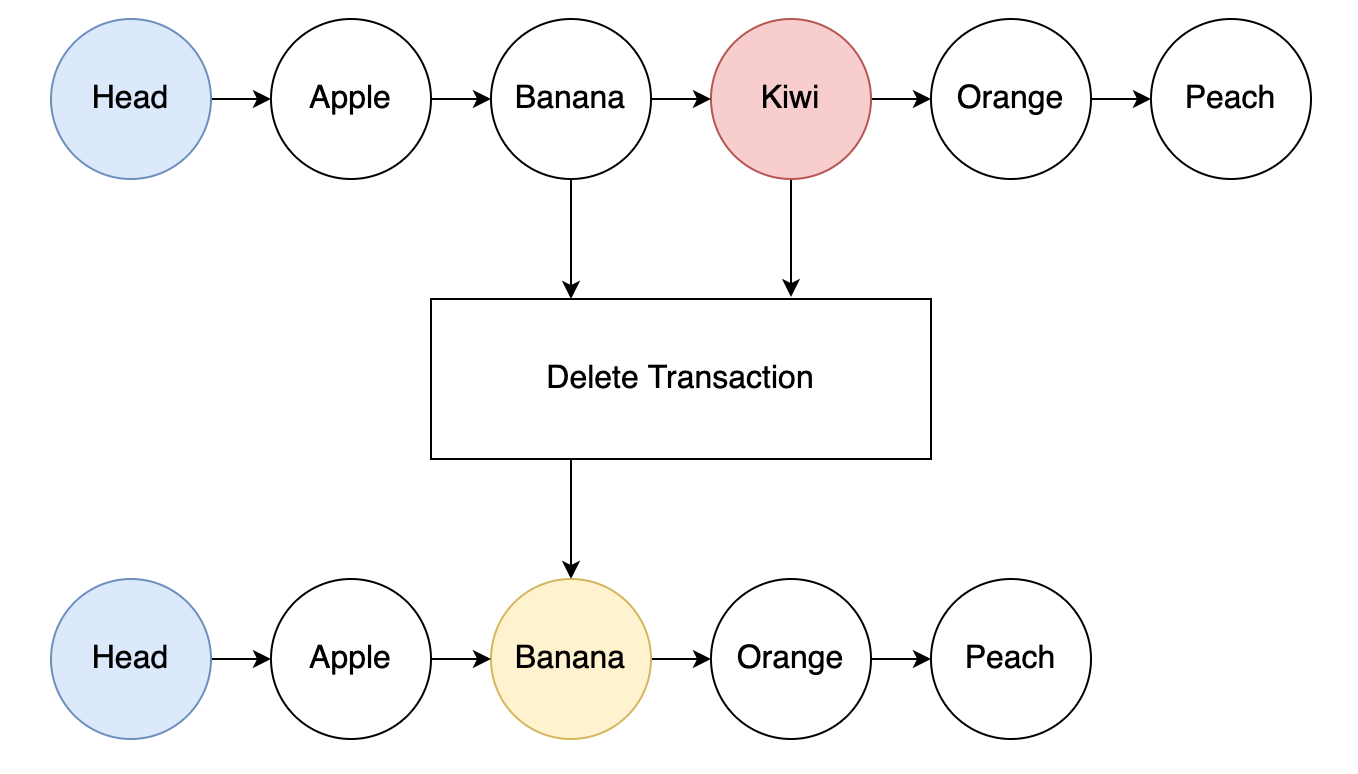
To remove an entry:
- Inputs: The entry to remove and its preceding entry.
- Output: The preceding entry is modified to point to what the removed entry was pointing to.
Utilizing NFTs as Pointers
NFTs serve as robust and unique pointers within the list. Their uniqueness is ensured by a specific minting policy related to the list's head NFT.
Key Considerations
- Efficiency: As on-chain lookups are inefficient, off-chain structures are recommended for this purpose.
- Datum Hashes: Not suitable for pointers due to the complexity of updates and security concerns.
- Security: The integrity of the list is maintained through careful minting policies and entry validation.
Advanced Features
- Forwarding Minting Policy: A feature of Plutus to control NFT minting dynamically.
- List Head: Utilizes an empty head entry for validating insertions at the start of the list.
- End-of-List Insertions: Handled by ensuring the last entry points to Nothing.
Plutarch Linked List implementation
The Plutarch Linked List implementation provides several functions to create and manipulate Linked List. Below is a brief overview of each function:
pInit: Constructs the Linked List headpDeinit: Destructs the Linked ListpInsert: Inserts a node into the linked listpRemove: Removes a node from the linked list